Le gia tien is the ceremony at the family altar on the wedding morning. The couple report their marriage to the ancestors, then serve tea to their living elders with both hands and receive blessings and gold. It takes twenty to forty minutes at each house, starts early because the hour is chosen for luck, and it is the part of the day families watch again years later.
What le gia tien actually is
English does not have the word. People say tea ceremony, which is fair but incomplete: the tea is the visible part, and the point underneath it is older. The couple stand in front of the ancestral altar, light incense, and tell the family's dead that this marriage is happening. Then they turn around and serve the living.
That order is the whole meaning. You ask permission from the people who came before, and only then do you receive the blessing of the people in front of you.
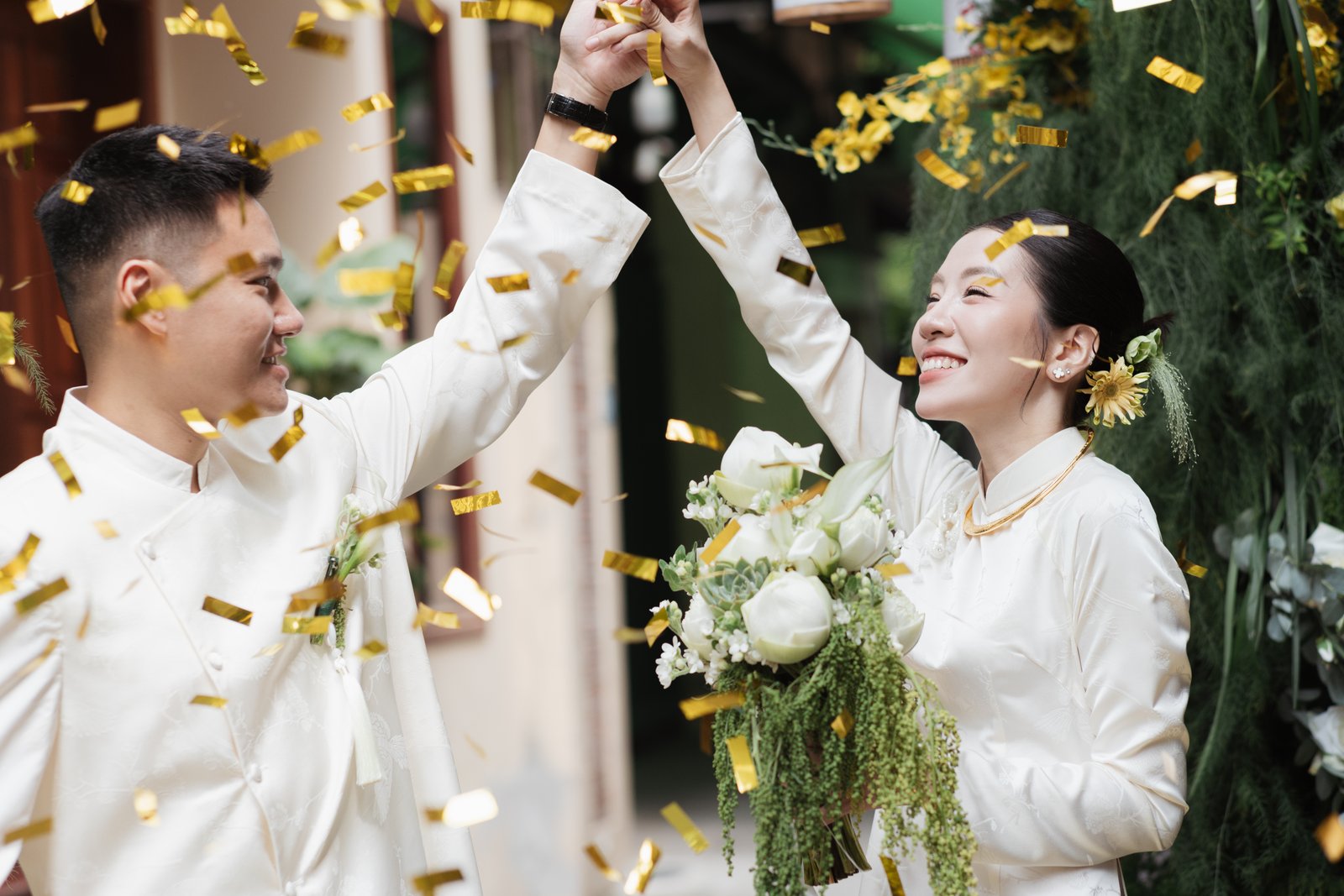
What happens, in order
- The groom's family arrives at the bride's home carrying the gift trays, in a fixed order, oldest first.
- The elders speak. One representative from each family makes a short formal speech asking for and granting permission.
- The trays are opened and placed on the altar.
- Incense at the altar. The couple light incense together and bow, usually three times.
- Tea to the elders. Served with both hands, to each parent and grandparent in turn, with a short word to each.
- The gifts. The women of the family put gold on the bride: earrings, a chain, bracelets. This is often the moment the mothers cry.
- The procession. The bride leaves with the groom's family, and in many families the whole sequence repeats at his house.
Regions differ. In the south the engagement and the wedding are often merged into one morning. In the north they stay separate, weeks apart. Ask your own family rather than a website, including this one.
How long it takes, and why it starts so early
The ceremony is short, twenty to forty minutes at each house. The day is long because of everything around it: the drive between families, the procession, the changes of clothes, the photographs with every branch of the family.
The start time is not chosen for convenience. An elder, or sometimes a monk, picks the auspicious hour, and it is often between five and seven in the morning. Hair and make-up therefore start between three and four. Nobody who has been through it describes it as relaxing, and that is part of why it means something.
What everyone wears
- The bride: ao dai, traditionally red, often with a khan dong, the moulded headpiece. Many brides now choose a lighter colour for the daytime and keep red for the altar.
- The groom: matching ao dai, or a dark suit if the family is less traditional.
- Parents: ao dai for mothers, ao dai or suit for fathers.
- Guests: cover shoulders and knees, avoid white and black as the main colour, shoes off at the door.
The trays, the gold, and who pays
The gift trays, mam qua, are carried by unmarried young people from the groom's family and received by the same number from the bride's. They hold betel leaves and areca nut, tea, wine, cakes, fruit, and often a roast pig. The number of trays is agreed between the families beforehand and differs between regions.
The gold is not symbolic. It is the bride's own property, given in front of witnesses, and in a culture where that mattered enormously it still carries weight.
On money: tradition says the groom's family covers the engagement gifts and their own banquet, and the bride's family hosts their side. In practice, couples living abroad now usually pay for most of the day themselves while the families contribute. Nobody will tell you a number. Agree it early, privately, and in both families' presence rather than through one person.
Why this room is hard to photograph
We will be honest about the craft here, because it is the reason couples end up disappointed with photographs of the most important half hour of their day.
The altar room is small, often three metres by four. It faces the door, so the only real light comes from behind whoever is speaking. It is crowded, and the ceremony cannot be paused or repeated. A photographer who has not worked one before will either use a hard flash that kills the atmosphere, or shoot from the doorway and come back with the backs of relatives' heads.
How we work it: two cameras, one inside at the altar and one on the family's faces, light shaped rather than blasted, and a quiet word with the family elder beforehand so we know when to move and when not to. We do not rearrange anyone. The ceremony is not a set.