One flowing dress for movement, one simpler dress for the city, a light linen or cotton suit, flat shoes you can walk in, and a shawl for temples. Add an ao dai if you want the pictures to look like Vietnam and not like anywhere. Our collections already include two gowns and one suit, so most couples bring only the personal pieces.
Dress for the heat first, the photos second
This is the one piece of advice couples wish they had taken. Vietnam is humid in a way that photographs do not show. In Saigon in April, or Hanoi in July, it can be thirty five degrees with ninety percent humidity by nine in the morning. A corseted ballgown with a heavy underskirt is a wonderful picture for the first twenty minutes and a difficult hour after that.
What works: natural fibres, a skirt that moves in wind, a bodice that is not boned to the waist, and a second lighter option to change into. What does not: wool suits, thick satin, anything that needs a hidden hoop.
We plan around it too. In the hot months we start at sunrise, shoot the heaviest dress first while the air is still cool, and change into the lighter one as the sun climbs.
What to bring, in practice
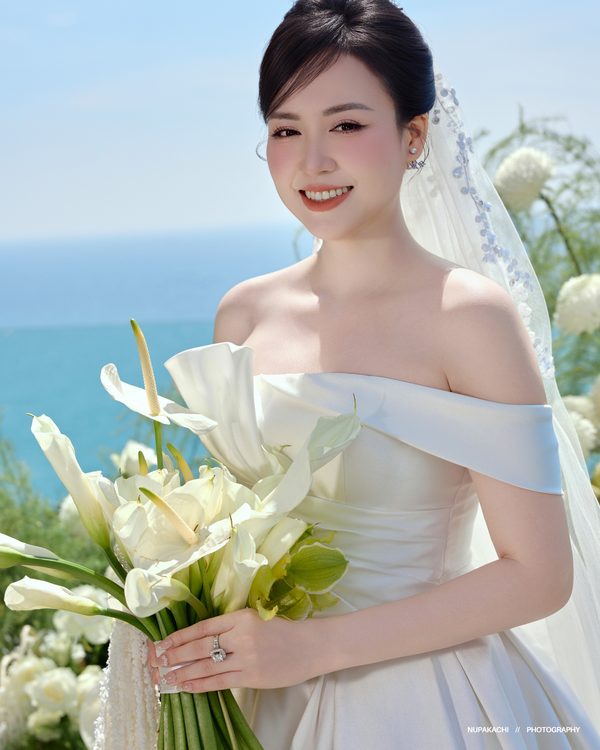
- One long dress that moves. Chiffon, silk, anything with a train or a wide skirt. This is the dress that makes the frames people print.
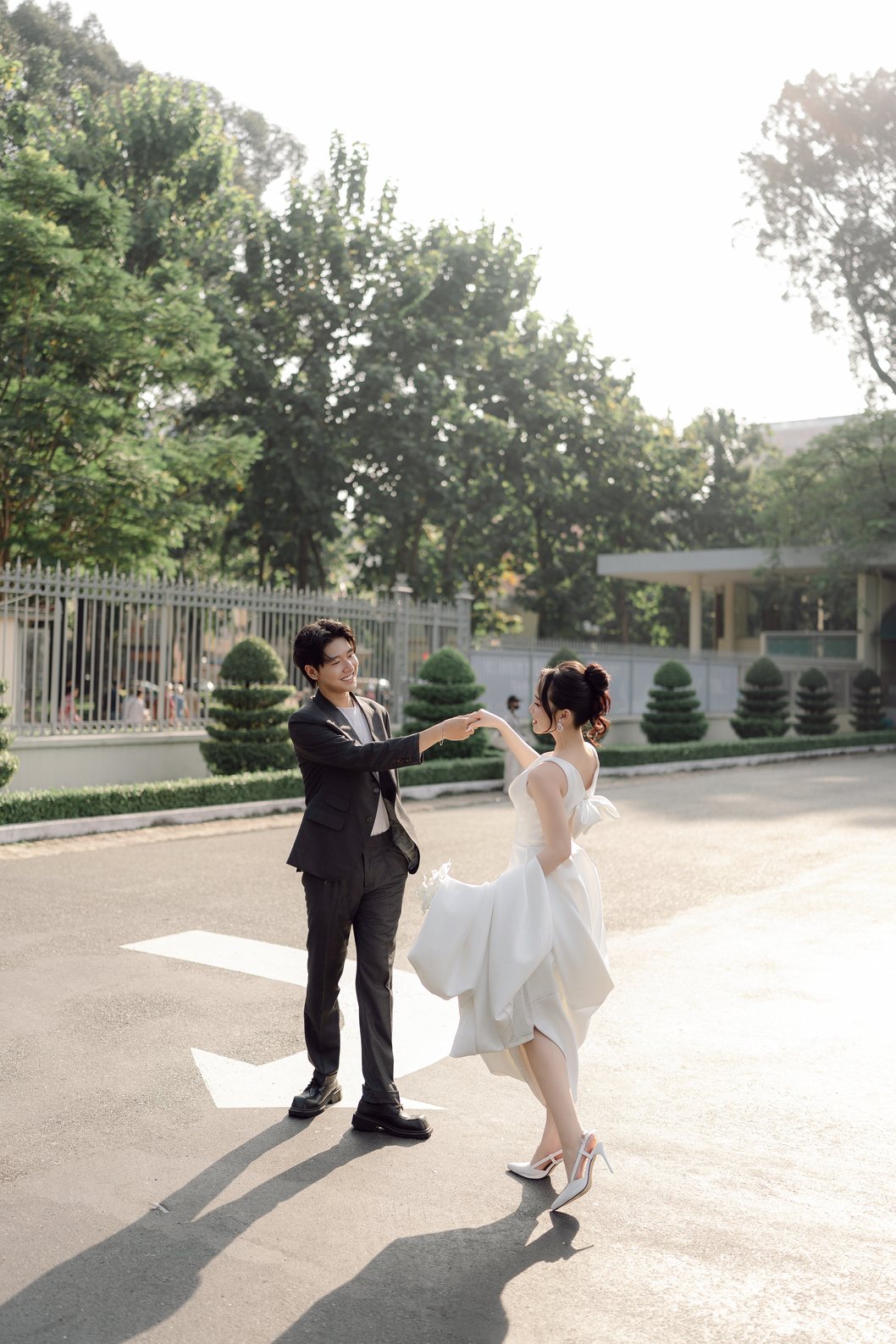
- One simpler dress. Fitted, shorter, easy to walk in. This is the one for coffee shops, markets, motorbikes and the city at night.
- A light suit. Linen or cotton, in cream, sand, pale grey or soft blue. Black absorbs heat and photographs flat against our greenery.
- Flat shoes. Then the heels for standing frames.
- A shawl or light jacket. For temples and for air-conditioned cars.
- Your own jewellery. Rings, a family piece, a watch that means something. These make the close frames personal.
The ao dai question
The ao dai is the Vietnamese long dress: a fitted silk tunic over loose trousers. It is the single most useful thing you can wear here, for three reasons.
It is cooler than a western gown. It moves in a way that suits film as much as photographs. And it makes the pictures unmistakably Vietnamese, which matters if you came all this way.
Colour carries meaning. Red is the traditional bridal colour and the one families expect at a ceremony. White, cream and soft pastels read as modern and work beautifully in old towns and gardens. If you are marrying into a Vietnamese family, ask them. It is the kind of small thing that makes a grandmother very happy.
If neither of you is Vietnamese, an ao dai is still welcome. Wearing one respectfully is read as a compliment here, not as a costume, as long as you wear it properly rather than as a prop.
Temples, pagodas and what covering up means
Pagodas and communal houses are working places of worship, not film sets. Shoulders and knees covered, shoes off where asked, and no climbing on anything. Some halls do not allow photographs inside at all.
We ask permission at every location rather than turn up and start shooting. It costs ten minutes and it is the difference between being welcomed back and being asked to leave halfway through a session.
Shoes, hair and the things people forget
- Hair in humidity. A tight polished style will not survive a morning outdoors here. Our stylists build looks that are meant to soften, so that hour three still looks intentional.
- Make-up. Bring your own lipstick for touch-ups. Everything else is in our kit.
- A change of clothes for the drive. Especially for destination sessions where the car is two hours each way.
- Water and something to eat. We carry both, but bring what you actually like.
- Steaming. Do not iron your own gown in a hotel room on the morning. Send it to us the day before and our team presses it properly.
What is already in our wardrobe
Every pre-wedding collection includes two gowns and one suit from our own wardrobe, with the veil and the bouquet, hair and make-up, and transport within the city on the day. Fitting happens before your session, so nothing is a surprise on the morning.
That means most couples travel with hand luggage: shoes, jewellery, an ao dai if the family has one, and whatever piece they could not leave at home.